
"The Konark Sun Temple is not just a ruin; it is a silent witness to a time when Indian science and art were perfectly synchronized, capturing the eternal rhythm of the sun in solid stone."
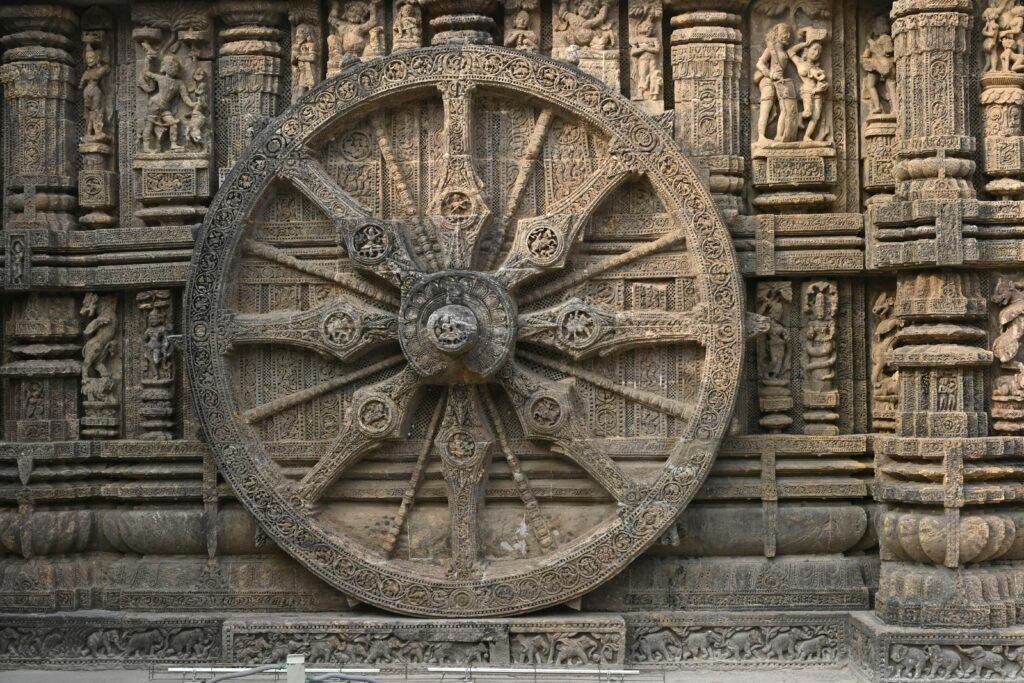
The Wheels (Sundials)
Each wheel is nearly 10 feet in diameter. Beyond their beauty, they are scientific marvels; at least four of them act as accurate sundials. By shadow cast by the wheel’s spoke, one can calculate the time.
Symbolism
The 24 wheels represent the 24 hours of a day (or the 24 fortnights of the year), while the eight major spokes on each wheel denote the prahars (three-hour periods) of the day.
Architectural Grandeur
A high-pillared hall where Devadasis performed ritual dances. Every inch of these pillars is covered with carvings of musicians and dancers in various mudras.
Rising from the golden sands of Odisha, the Konark Sun Temple is a monumental masterpiece that represents the pinnacle of Kalinga architecture. Built in the 13th century by King Narasimhadeva I of the Eastern Ganga Dynasty, this UNESCO World Heritage site is designed as a colossal celestial chariot for the Sun God, Surya. Known to early European sailors as the “Black Pagoda” because of its dark magnetic silhouette that reportedly drew ships toward the shore, Konark remains one of India’s most awe-inspiring spiritual and architectural landmarks
The Legend of Dharmapada-
Local folklore tells a poignant story of the temple’s completion. It is said that 1,200 artisans worked for 12 years but could not fix the Kalasha (crown stone) on the temple. Dharmapada, the 12-year-old son of the chief architect Bisu Moharana, arrived and successfully completed the task. To save the reputations of the 1,200 craftsmen—who faced execution if a child outshone them—the young boy is said to have jumped from the temple top into the sea, sacrificing himself for his community.
Architectural Grandeur
The temple complex originally consisted of three main sections:
The Natya Mandir (Dance Hall): A high-pillared hall where Devadasis performed ritual dances. Every inch of these pillars is covered with carvings of musicians and dancers in various mudras.
The Jagamohana (Assembly Hall): The only major structure still standing today, known for its pyramidal roof and massive scale.
The Rekha Deul (Sanctum Sanctorum): Once soaring to over 200 feet (70 meters), the main tower collapsed over the centuries, but its base remains a testament to its former height.
A Chariot in Stone
The most striking feature of the temple is its conception as a giant chariot. The entire structure sits on a high platform, “pulled” by seven spirited horses (representing the days of the week) and featuring 24 intricately carved wheels.
The Wheels (Sundials): Each wheel is nearly 10 feet in diameter. Beyond their beauty, they are scientific marvels; at least four of them act as accurate sundials. By observing the shadow cast by the wheel’s spoke, one can calculate the time down to the minute.
Symbolism: The 24 wheels represent the 24 hours of a day (or the 24 fortnights of the year), while the eight major spokes on each wheel denote the prahars (three-hour periods) of the day.
The Art of Detail
The walls of Konark are a vibrant “encyclopedia in stone.” The carvings depict everything from the divine to the mundane:
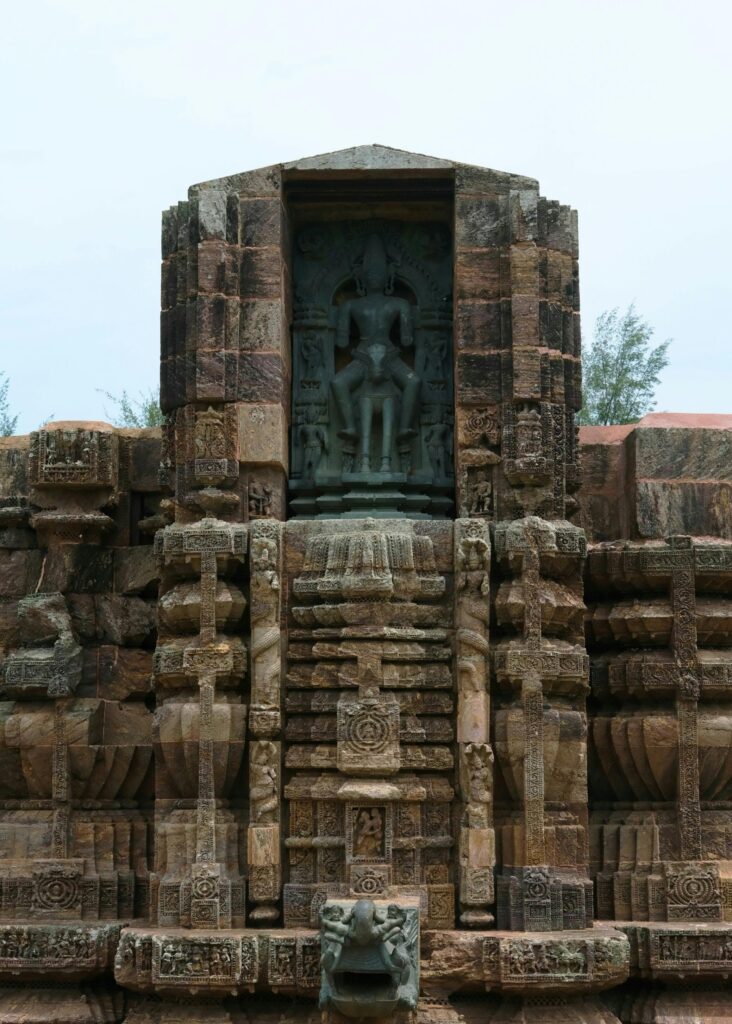
Deities and Mythology: Exquisite idols of Surya at three different positions to catch the sun at dawn, noon, and sunset.
Social Life: Scenes of royal processions, hunting, military life, and daily chores.
Erotic Art: Like Khajuraho, Konark features bold, sensual sculptures that reflect the Tantric traditions and the celebration of life prevalent in the 13th century.
Flora and Fauna: Intricate patterns of elephants (symbols of royalty and strength), lions, and mythical creatures.