
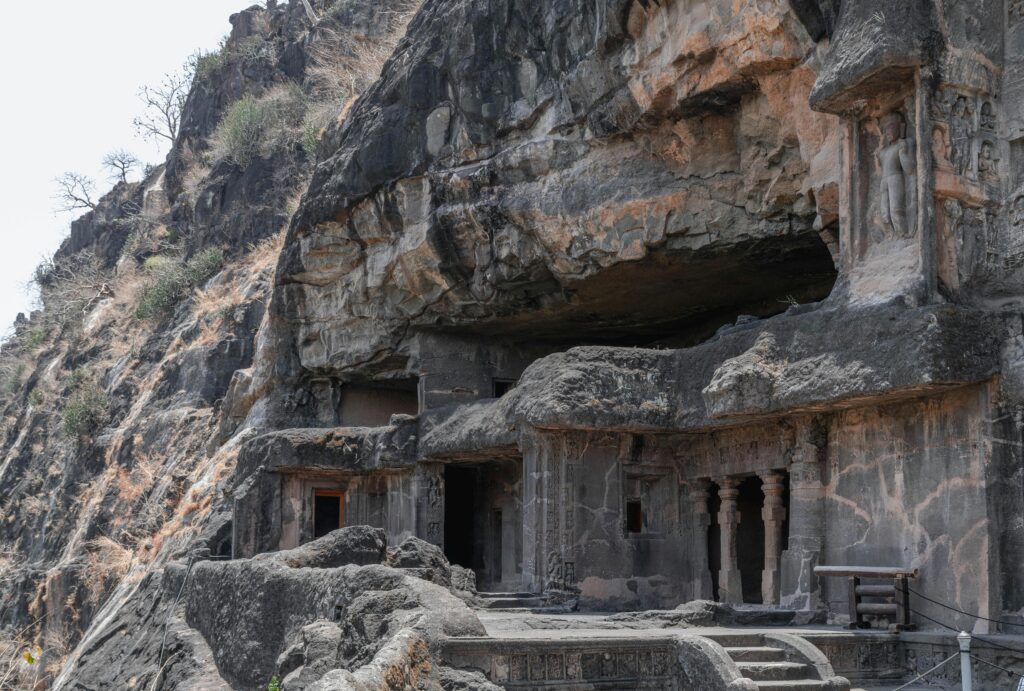
"The Ajanta Caves remain a timeless bridge to India’s golden age, offering a quiet, stony sanctuary where the whispers of ancient monks still seem to echo through the painted corridors."
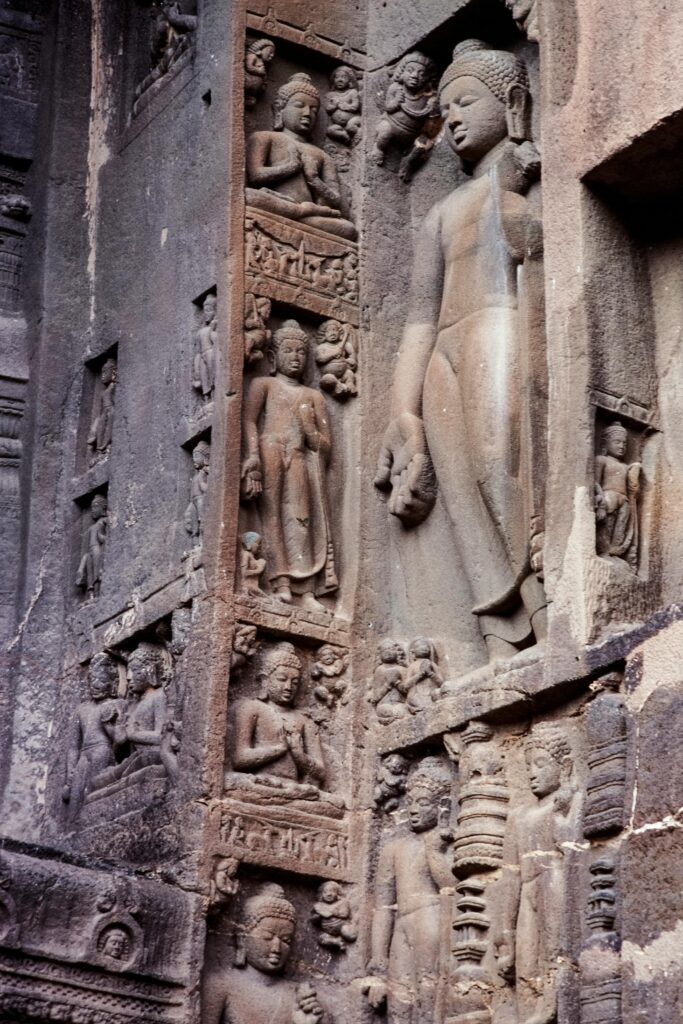
The Satavahana Phase
Dating back to the 2nd and 1st centuries BCE, these caves are simpler and focused on the symbolic representation of Buddha (such as the Stupa). Developed during the reign of Emperor Harishena (5th century CE).
The Masterpieces
Cave 1 houses the iconic paintings of Padmapani and Vajrapani, Bodhisattvas representing compassion and power, known for their delicate expressions and fluid lines.
Did You Know?
The caves were carved from top to bottom. This meant the architects didn’t need scaffolding, but they also had no room for error—once a stone was carved away, it couldn’t be replaced.
Nestled within the Sahyadri hills of Maharashtra, the Ajanta Caves stand as one of the most significant achievements of ancient human artistry. Carved out of a horseshoe-shaped basalt cliff along the Waghur River, these 30 rock-cut Buddhist cave monuments date from the 2nd century BCE to about 480 CE.
UNESCO World Heritage-listed, Ajanta is more than just a historical site; it is a profound testament to the intersection of faith, patience, and unparalleled craftsmanship.
The Mastery of the Ajanta Murals
What sets Ajanta apart from other rock-cut structures like Ellora is its fresco-secco paintings. These murals are among the finest surviving examples of ancient Indian art.
Themes: The walls tell stories from the Jataka tales (previous lives of the Buddha) and the life of Gautama Buddha.
Technique: Artists applied a layer of clay, lime, and hay to the stone, painting while the surface was dry. They used natural pigments derived from minerals and plants—vibrant blues from lapis lazuli, reds from ochre, and greens from local stone.
The Masterpieces: Cave 1 houses the iconic paintings of Padmapani and Vajrapani, Bodhisattvas representing compassion and power, known for their delicate expressions and fluid lines.
UNESCO World Heritage-listed, Ajanta is more than just a historical site; it is a profound testament to the intersection of faith, patience, and unparalleled craftsmanship.
Architectural Brilliance
The caves are divided into two functional types:
-
Viharas (Monasteries): Residential halls for monks, featuring central square courts surrounded by small cells.
-
Chaityas (Prayer Halls): Cathedral-like spaces with vaulted ceilings and a stupa at the end, designed for congregational worship. Cave 26 is particularly famous for its massive reclining sculpture of the Mahaparinirvana (the death of Buddha), an awe-inspiring sight that captures the solemnity and peace of the event.
The “Lost and Found” History
Following the decline of Buddhism in the region, the caves were abandoned and swallowed by the dense jungle. They remained hidden for nearly a millennium until 1819, when a British officer named John Smith stumbled upon the entrance to Cave 10 while on a tiger hunt.
Travel Tips for Visitors
Best Time to Visit: Between October and March to avoid the intense heat. The monsoon season (June–September) is also beautiful as the surrounding greenery and waterfalls come alive.
Getting There: The nearest city is Aurangabad, which is well-connected by air and rail. From there, it is a roughly 100 km drive to the caves.
Preservation Note: Photography with flash is strictly prohibited inside the caves to protect the ancient pigments from fading.